

Having a structure like greenhouse to help protect a tender of off-season plants from excessive cold is definitely a game changer. For a home gardener, a small greenhouse is enough to help overwinter frost-sensitive plants, grow some winter crops and house seedlings that don’t mind a little bit of cold.

There are a few inexpensive ways to heat up or add heat to the greenhouse. Keep in mind that this is for a small space greenhouse setup. Below are a few of the ways you could use to retain or add heat in the greenhouse:
- Thermal (Heat) Mass
Heat mass is the property/ability of an object to absorb, store and release heat. Concretes, tiles, bricks, rock, a gallon of water, pots have this ability. This is the reason I add as many pots and objects as possible in the greenhouse.
- Insulation
Insulators are materials that reduces heat gain or loss by providing a barrier. In my greenhouse, I use bubble wraps to cover the drafts from the vents. I also use leaves to to insulate the pots, where I am growing my frost-sensitive plants.
- Compost Bin.
Hot compost with busy microbial activities releases heat that could benefit the greenhouse. If you have one that could fit in your greenhouse, I would keep it in there, plus you will be happy to turn (mix) compost in a warmer outdoor setup. Even if you don’t have a hot compost like me, I would still add a compost container of some sort. If anything else, it will be an additional object that will absorb, store and release heat in the greenhouse.
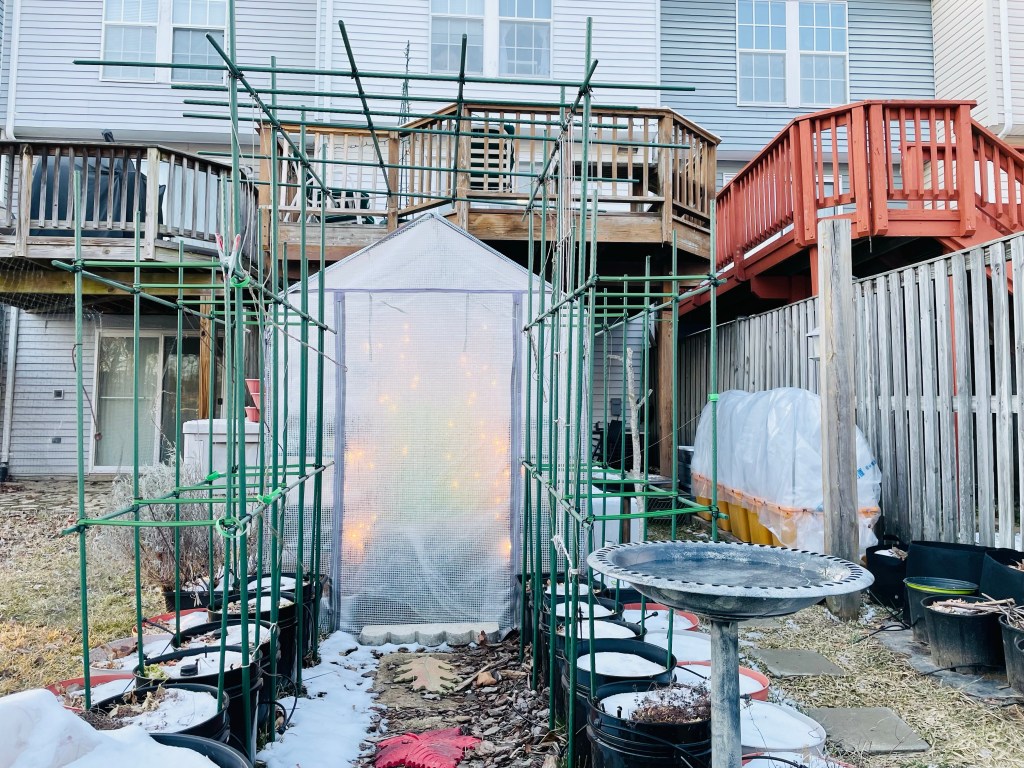
If you’re only housing cold tolerant plants, such a brassicas and lettuce, I don’t think there’s a need to add the following ideas below. Cold tolerant plants are able to handle cold temperatures but they certainly benefit from having protection from constant thawing and freezing temperatures.
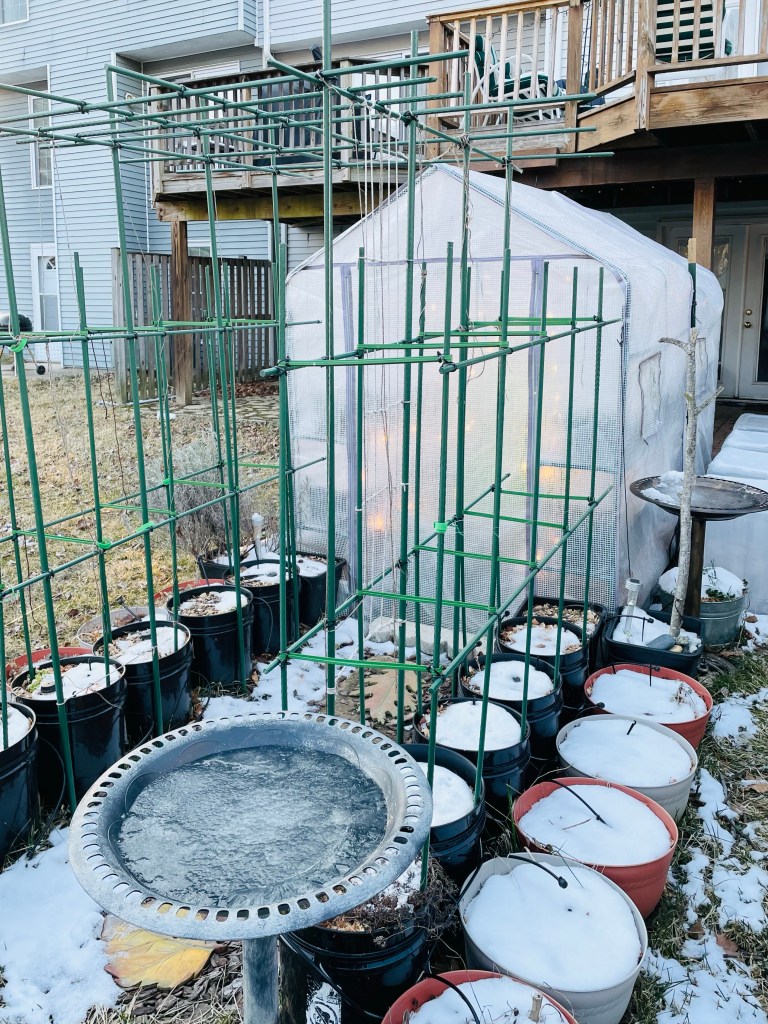
To make life a little more convenient and efficient I recommend using the following:
Automatic Timer – This will help you get the devices below on a regular schedule with requiring you to plug or unplug it. Mine is connected to my Amazon app that I could easily turn on or off or change the schedule.
Thermometer/Hygrometer with remote monitor – This allows you to check on the temperature in the greenhouse without needing to open or close the greenhouse. This will give you an overview of the temperature difference in the greenhouse and outdoor.
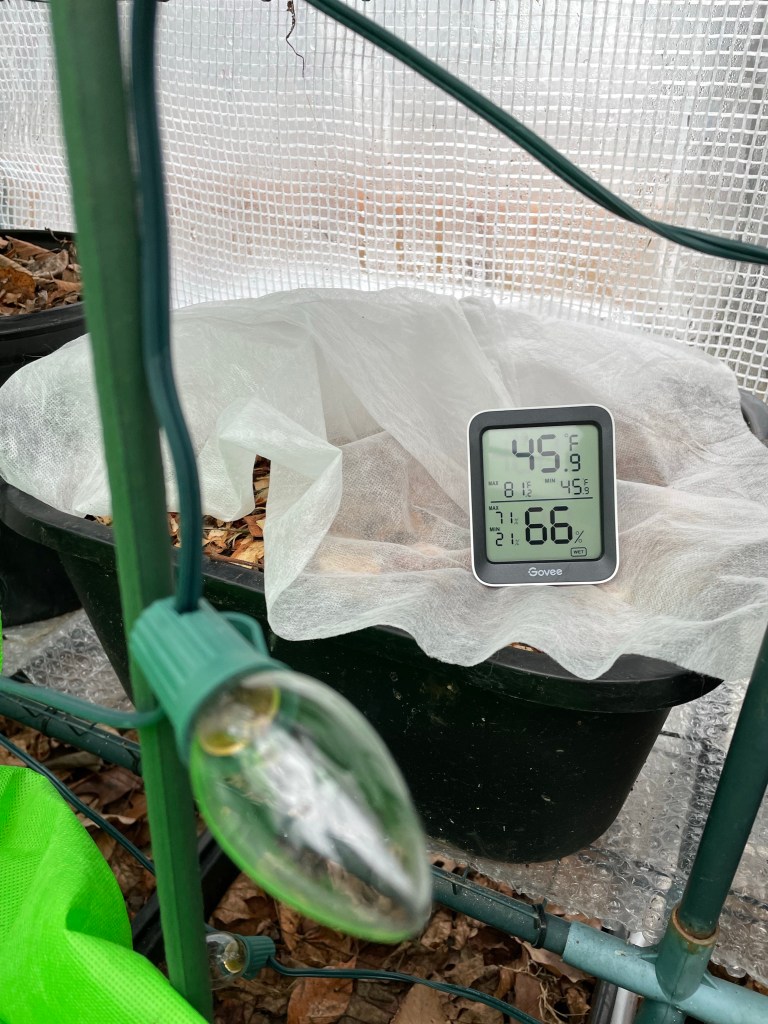
- C9 Incandescent Lights
Incandescent light is a source of electric light caused by heating the filament (incandescence), where light and heat is emitted. C9 bulbs is a common Christmas lights used in most household. It is safe to use and the heat if gives off is a good supplement for a greenhouse. It adds a good amount of heat during the coldest night, which makes a difference in a small greenhouse.
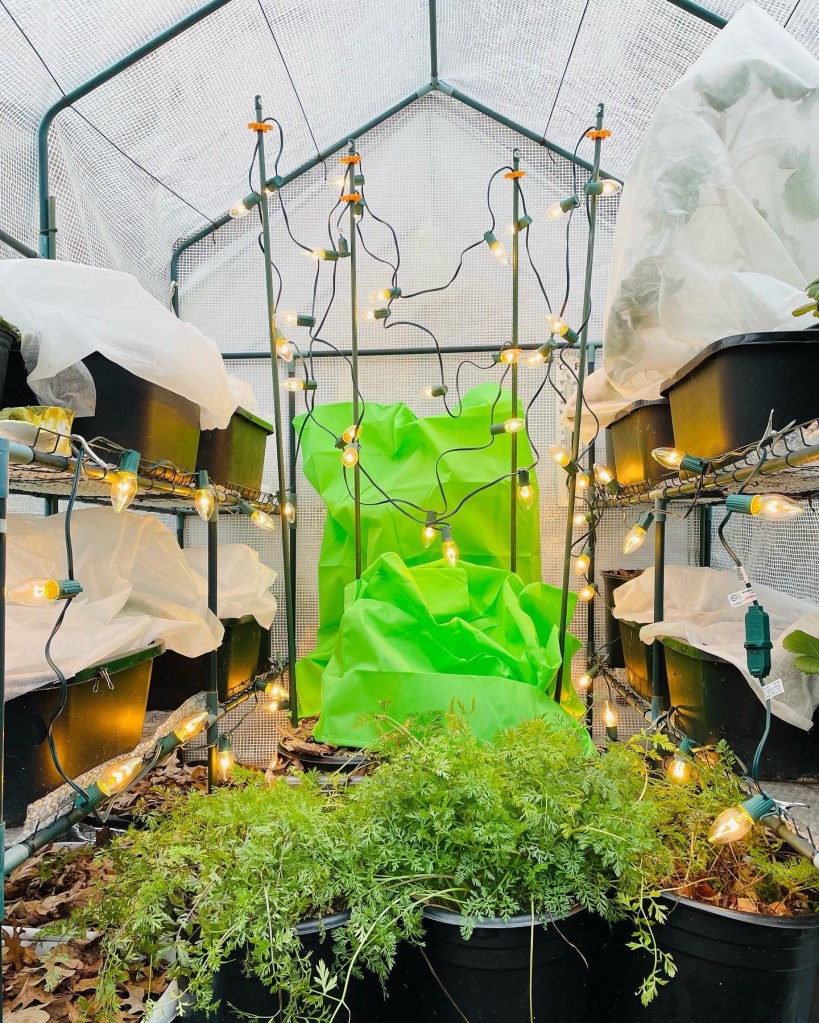
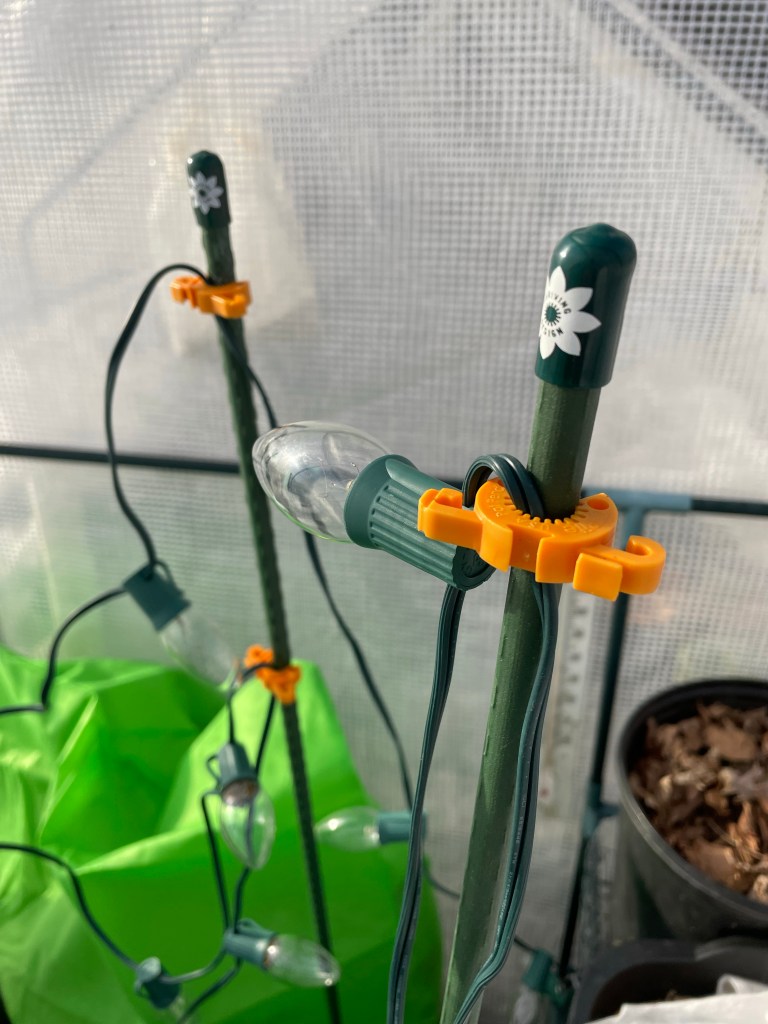
In my setup I apply a precautionary measure to prevent the potential of fire in the greenhouse by not allowing the light bulbs to touch the frost cloth fabric/blanket or any combustible materials. I use Thriving Design C-bites snap clips to easily create a gap and elevate the lights and for better heat distribution.
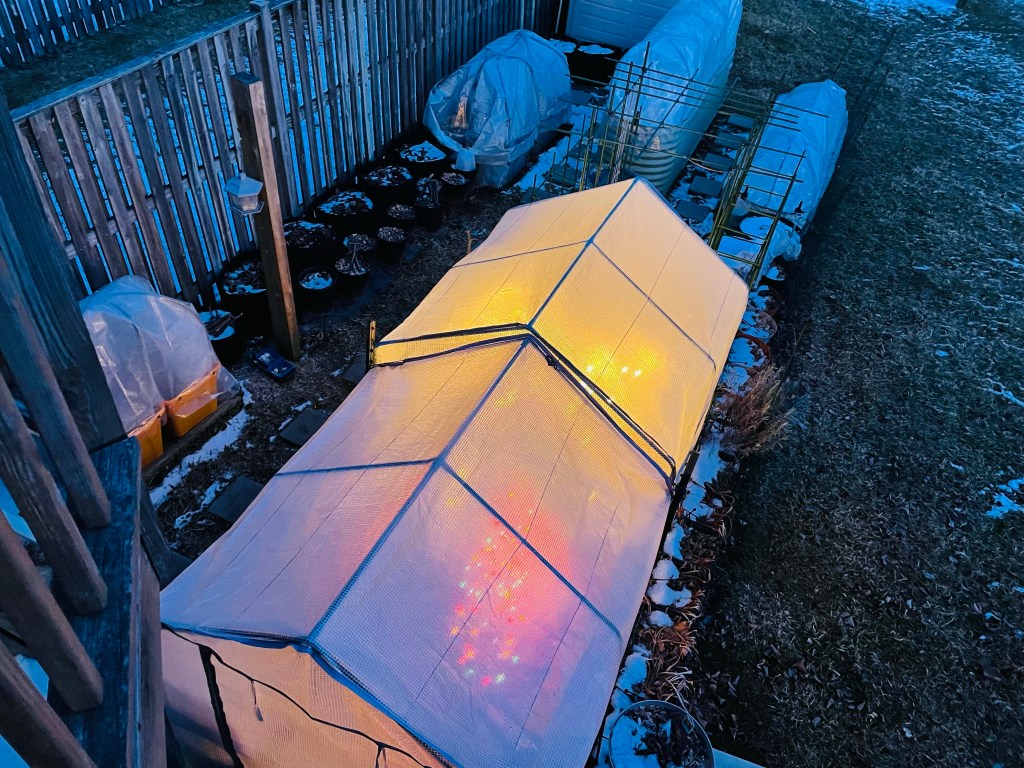
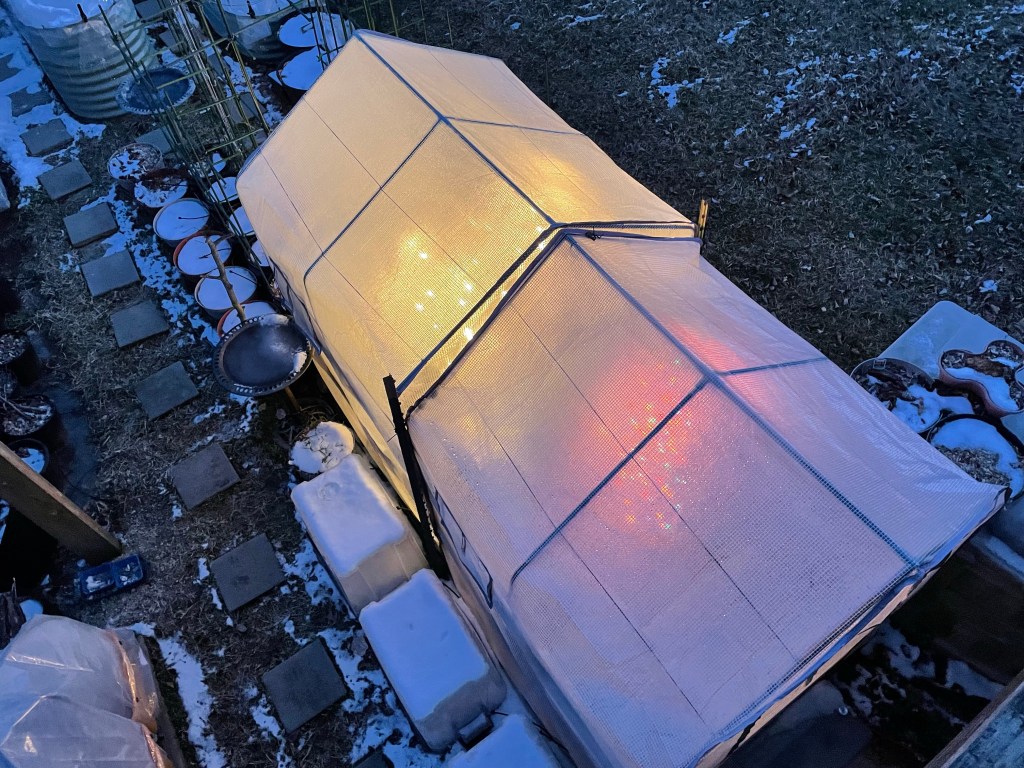
It looks beautiful isn’t it?
- Aquarium heater
Aquarium heater is another good way to add supplemental heat to a greenhouse. For a small greenhouse, I would use at least a 5 gallon bucket and submerge an aquarium heater and allow it to release heat during the night.
These concepts are good ways to utilize in order to keep those plant babies alive during the coldest month of the year. I want to mention, though, that it is very important to seal the drafts thoroughly so that the cold air don’t get in the greenhouse too easily.
This page contains Affiliate links. It will give me a little bit of commission when you purchase using my links at no extra cost to you. Your support will help me create more contents that helps home gardeners like you.















 Gingerfoot Garden
Leave a comment